

GENERAL RANGE
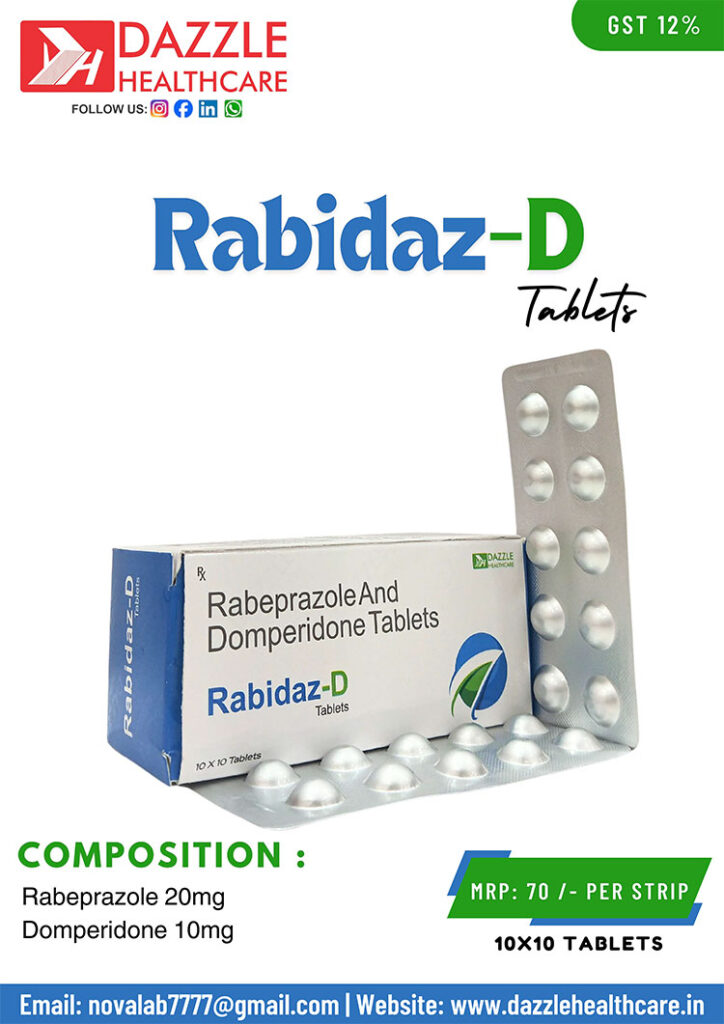
RABIDAZ-D Rabeprazole 20 mg and Domperidone 10 mg Tablets
Composition
Rabeprazole 20mg+Domperidone 10mg tab
| Packing | 10x10(Alu-Alu) |
|---|---|
| MRP | ₹700 |
| Category | GENERAL RANGE |
| Available for | PCD Pharma Franchise |
Product Description
A burning feeling behind the breastbone, a sour taste rising into the throat, and a stomach that feels full and queasy long after a meal. For many people these come together, and they spoil meals, sleep and plans. RABIDAZ-D is a tablet that pairs two medicines to deal with both sides of the problem: too much acid and a stomach that is slow to empty. This page explains what is in it, what it is used for, how it works, how to take it safely and how distributors can add it to a general range.
What Is RABIDAZ-D? Rabeprazole and Domperidone Tablets Brand Name and Generic Explained
RABIDAZ-D is the brand name. The generic name is Rabeprazole and Domperidone Tablets. Each tablet contains Rabeprazole 20 mg and Domperidone 10 mg. It is taken by mouth and is used on a doctor’s prescription.
Rabeprazole is a proton pump inhibitor, which reduces the amount of acid the stomach makes. Domperidone is a prokinetic, which helps the stomach and gut move food along and eases nausea. Together they are used when acid-related symptoms and sluggish digestion occur at the same time.
Rabeprazole and Domperidone Tablets Uses: When a Doctor May Prescribe It
A doctor may prescribe this combination for gastro-oesophageal reflux disease (GERD), where acid flows back from the stomach into the food pipe and causes heartburn and regurgitation. It is also used when acid reflux is accompanied by nausea, a feeling of fullness, bloating or vomiting, which can happen when the stomach empties slowly.
Rabeprazole is also prescribed for stomach and duodenal ulcers and for inflammation of the food pipe caused by acid. The combination tablet is best suited to people who have both acid symptoms and nausea or bloating. It is not meant for every kind of stomach upset, and symptoms such as weight loss without a reason, difficulty swallowing, repeated vomiting, black stools or vomiting blood need medical examination, not self-treatment.
What You Gain from It: Relief from Acid, Nausea and Bloating
The main benefit is that one tablet works on two problems. Acid production falls, so heartburn and the sour taste settle, and the stomach empties more smoothly, so the heavy, bloated and queasy feeling eases. For the patient this means one medicine instead of two, which makes the routine simpler and is easier to remember.
Many people notice an improvement in a few days, though how long treatment is needed depends on the condition and on the doctor’s advice. The tablet relieves symptoms and helps heal acid damage, but it does not replace changes such as eating smaller meals, avoiding late dinners and cutting down on foods and habits that trigger reflux.
How the Two Medicines Work Together
The stomach lining has tiny acid pumps, and rabeprazole switches these pumps off, so less acid is made through the day. With less acid, irritated tissue in the food pipe and stomach gets a chance to heal.
Domperidone works from a different angle. It blocks dopamine receptors in the gut and in the part of the brain that triggers nausea, which helps the stomach muscles contract properly and move food forward, and also calms nausea. The result is less acid on one side and better movement on the other.
Rabeprazole and Domperidone Tablet Dose and How to Take Them the Right Way
Take the tablet exactly as your doctor or pharmacist advises and follow the directions on the label. The number of tablets, the timing and the length of treatment depend on your condition, so no fixed dose should be assumed. Domperidone is generally used at the lowest effective dose for the shortest time needed, so do not continue it for longer than your doctor advises.
These medicines are usually taken before a meal, but follow the timing stated on the label or given by your doctor. Swallow the tablet whole with water and do not crush or chew it unless the label allows it. Do not take extra to hurry the relief, and if you miss a dose, take it when you remember unless the next dose is near. Never double up. Store it in a cool, dry place and keep it out of children’s reach. If symptoms do not improve in a few days or get worse, go back to your doctor.
Rabeprazole and Domperidone Tablets’ Side Effects and the Signs That Need a Doctor
Most people tolerate the combination well. Common effects include headache, dry mouth, stomach pain, diarrhoea or constipation, gas and dizziness. Domperidone can sometimes cause restlessness, and in some people it raises a hormone called prolactin, which may lead to breast tenderness or milk discharge.
Contact a doctor if side effects are severe or do not settle. Get urgent help for a fast, pounding or irregular heartbeat, fainting, severe or bloody diarrhoea, severe stomach pain, black stools, difficulty swallowing, or signs of an allergic reaction such as rash, swelling of the face or breathing trouble. Domperidone has been linked to heart rhythm changes in some people, which is why the lowest dose for the shortest time is advised.
Who Should Be Careful Before Using It
Do not use it if you are allergic to rabeprazole, domperidone or similar medicines. Domperidone should not be used by people with a known heart rhythm problem such as a long QT interval, heart disease or heart failure, severe liver disease, bleeding or blockage in the stomach or gut, or a prolactin-producing tumour of the pituitary gland. Tell your doctor if you have low potassium or magnesium levels, as these affect heart rhythm.
Long-term use of acid-reducing medicines such as rabeprazole can, in some people, lower magnesium and vitamin B12 levels and may be linked to weaker bones, so a doctor should review long courses. Pregnant and breastfeeding women should use it only if the doctor decides it is needed. Children should take it only on a doctor’s advice, and older adults need extra care because they are more likely to have heart or kidney problems.
Medicines can interact with this combination. Antifungals such as ketoconazole and itraconazole, some antibiotics such as erythromycin and clarithromycin, and certain heart and anti-HIV medicines can raise domperidone levels or affect the heart. Rabeprazole can change how some medicines are absorbed and how others, such as warfarin, digoxin and methotrexate, behave. Tell your doctor about every medicine and supplement you take. This is general information and does not replace a doctor’s advice.
Rabeprazole and Domperidone Tablets Composition and Product Details
| Detail | Information |
|---|---|
| Product Name | RABIDAZ-D |
| Salt Composition | Rabeprazole and Domperidone |
| Strength | Rabeprazole 20 mg and Domperidone 10 mg |
| Dosage Form | Tablet [confirm the release type, such as enteric-coated or sustained-release, from the label] |
| Pack | 10 x 10 Alu-Alu |
| Category | General Range |
| Marketed by | Dazzle Healthcare |
Supplier and Distributor Information: Dazzle Healthcare
Dazzle Healthcare is a pharmaceutical company at Plot No 208, 1st Floor, Industrial Area, Phase 1, Panchkula, Haryana, 134113. It offers PCD Pharma Franchise opportunities across a general range of products, and RABIDAZ-D is listed in this range. It is available to distributors through the Rabeprazole and Domperidone Tablets PCD Pharma Franchise.
Acidity and reflux are among the most common complaints that doctors see every day, so a rabeprazole and domperidone tablet is a familiar and regularly prescribed product for general physicians and gastro doctors. For bulk orders and current terms, contact the company directly and have the territory, pricing and support confirmed in writing before you start.
Why Distributors Look at Dazzle Healthcare
Dazzle Healthcare offers a broad general range under one supplier, so a distributor can build a balanced portfolio instead of managing many companies. The company states that it offers PCD franchise opportunities, including on a monopoly basis, and that it provides marketing support. Partners can ask for the product list, pricing and business details. Check the support package and any certifications directly before you sign an agreement.
Questions People Ask About RABIDAZ-D
Q.1 What is RABIDAZ-D used for?
Ans. It is used for acid reflux and heartburn, especially when nausea, bloating or a feeling of fullness occurs along with it, as prescribed by a doctor.
Q.2 What does RABIDAZ-D contain?
Ans. Rabeprazole 20 mg and domperidone 10 mg per tablet.
Q.3 How do rabeprazole and domperidone work together?
Ans. Rabeprazole reduces stomach acid, and domperidone helps the stomach move food along and eases nausea.
Q.4 When should I take it?
Ans. Usually before a meal, but follow the timing on the label or as your doctor advises.
Q.5 How long can I take it?
Ans. Only for the period your doctor advises. Domperidone is usually kept to the shortest time needed, so do not continue it on your own.
Q.6 What are the common side effects?
Ans. Headache, dry mouth, stomach pain, diarrhoea or constipation, and dizziness. See a doctor if a fast or irregular heartbeat, fainting or severe stomach pain occurs.
Q.7 Who should avoid it?
Ans. People with heart rhythm problems or heart failure, severe liver disease, gut bleeding or blockage, and those who are allergic to the ingredients.
Q.8 Can I take it in pregnancy?
Ans. Only if your doctor decides it is necessary.
Q.9 Does it replace diet changes for acidity?
Ans. No. Smaller meals, avoiding late dinners and cutting down on trigger foods still matter.
Q.10 Is RABIDAZ-D available for PCD Pharma Franchise?
Ans. Yes, through Dazzle Healthcare. Contact the company for current pricing, territory and terms.
Related Products


